
Celestial Tales: The Influence of Stars in Indian Mythology
The Cosmic Connection: Introduction to Celestial Tales
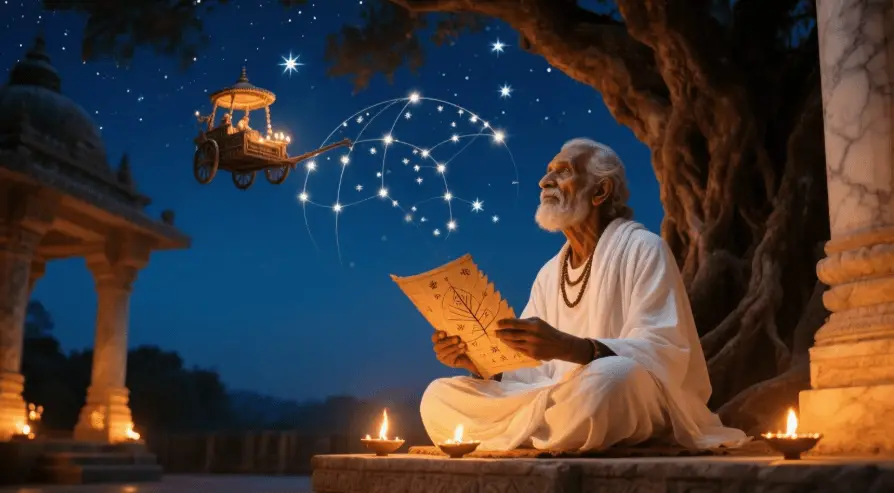
For millennia, celestial tales have formed the spiritual backbone of Indian mythology, presenting a fascinating intersection between astronomical phenomena and cultural narratives. These ancient stories reveal how the influence of stars permeates every aspect of Indian spiritual tradition, from birth rituals to harvest festivals. Spiritual astrology in the Indian context represents more than just fortune-telling; it's a sophisticated system connecting cosmic patterns with human destiny.
Ancient Foundations of Celestial Mythology
Indian mythology's celestial tales originate from the Vedic period, with references appearing in scriptures dating back to 1500 BCE. The Rigveda contins numerous hymns dedicated to celestial deities like Surya (Sun), Chandra (Moon), and the Ashvins (divine horsemen associated with morning stars). What makes these celestial tales unique is their seamless integration of astronomical observations with profound spiritual teachings.
Archaeological evidence from Indus Valley sites suggests early Indians tracked lunar cycles and planetary movements, laying the foundation for later astrological systems. The celestial beings in these stories often represent natural forces - for example, Varuna governs cosmic order much as he rules over the visible night sky. This connection between observable phenomena and divine narratives gave celestial tales their enduring credibility.
Nakshatras: The 27 Pillars of Destiny
The most tangible demonstration of stars' influence appears in the Nakshatra system, India's unique contribution to celestial mapping. Unlike Western zodiac signs based on solar months, each Nakshatra corresponds to specific stars or constellations along the moon's path. Traditional texts describe how these lunar mansions influence everything from personality traits to compatibility in relationships.
Consider the contrasting energies of Uttara Phalguni (associated with marriage and partnership) versus Mula (symbolizing radical transformation). Vedic astrologers analyze the Nakshatra positions at birth to create detailed life readings, demonstrating how celestial tales translate into practical spiritual guidance. The system's complexity - accounting for planetary rulers, associated deities, and symbolic meanings - shows the depth of ancient Indian astronomical knowledge.
Vedic Astrology: Science of Cosmic Influences
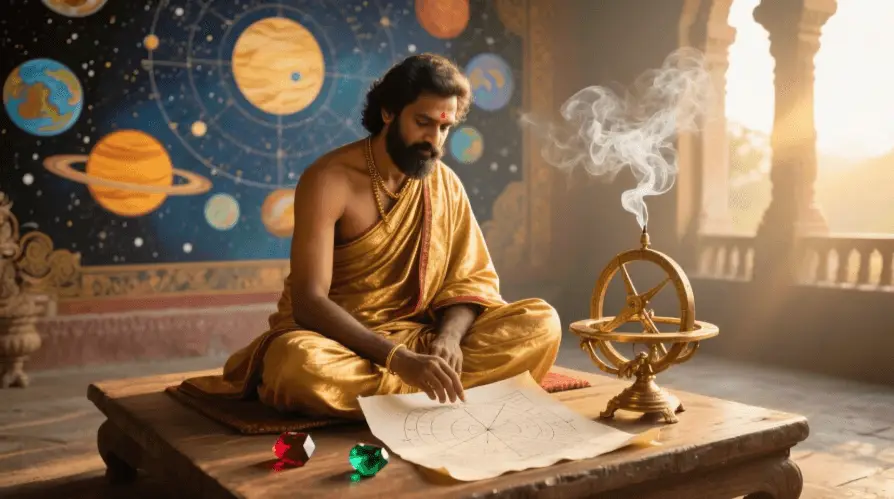
Spiritual astrology in India differs fundamentally from its Western counterpart by emphasizing karmic patterns rather than personality analysis. The Brihat Parashara Hora Shastra, a foundational text, describes how planetary positions at birth reflect past-life karmas coming to fruition. This explains why two people with similar charts may experience different life events - their soul histories differ.
The Navagraha (nine planets) system incorporates celestial bodies beyond the visible spectrum, including shadow planets Rahu and Ketu. Modern astronomy confirms these correspond to lunar nodes where eclipses occur, proving ancient rishis understood complex celestial mechanics. Remedial measures in Vedic astrology - like gemstone therapy or mantra chanting - work by harmonizing individual energy with cosmic vibrations.
Divine Intermediaries: Celestial Beings in Daily Life
Indian households routinely interact with celestial beings through daily rituals. The Gayatri Mantra invokes Savitr (solar deity) for enlightenment, while Tuesday fasts honor Mangal (Mars) for courage. These practices demonstrate how celestial tales transitioned from mythology to living tradition. Even urban Indians consult astrologers for major decisions, showing the persistent influence of stars in modern contexts.
Contemporary neuroscience offers intriguing parallels - lunar cycles demonstrably affect human sleep patterns and brain activity, validating ancient beliefs about Chandra's influence. Similarly, seasonal affective disorder research confirms Surya's importance in maintaining biological rhythms. This scientific backing helps celestial tales maintain relevance in our technology-driven age.
Celestial Narratives in the Digital Age
Modern retellings of celestial tales leverage new media while preserving core teachings. Animated series like "Little Krishna" introduce celestial beings to global audiences, while apps provide personalized Nakshatra readings. This digital renaissance has sparked renewed academic interest, with universities offering courses on Vedic astronomy's scientific basis.
Interestingly, the recent surge in space exploration has paralleled growing public fascination with celestial mythology. ISRO's missions to study the sun and moon coincide with renewed temple attendance during solar/lunar eclipses. This synergy between cutting-edge science and ancient wisdom highlights celestial tales' unique position in Indian culture.
Conclusion: Timeless Wisdom for Contemporary Seekers
The celestial tales of Indian mythology offer more than colorful stories - they present a comprehensive worldview connecting microcosm and macrocosm. From Nakshatra-based agriculture to astrological architecture (Vastu Shastra), the influence of stars permeates India's cultural DNA. As we advance technologically, these ancient narratives gain new relevance by addressing our innate need for cosmic connection.
Spiritual astrology continues evolving, with modern practitioners incorporating psychological insights while preserving traditional techniques. This dynamic interplay ensures celestial tales remain living wisdom rather than museum relics. Their enduring appeal lies in offering both practical life guidance and profound philosophical perspectives on humanity's place in the cosmos.
Sharma
|
2025.05.28


