
How Mythology Shapes Our Understanding of the Stars and Planets
For millennia, mythology has served as humanity's primary lens for interpreting celestial bodies and their planetary significance. These ancient narratives not only explained astronomical phenomena but established enduring astrological beliefs that continue influencing modern thought. From the star lore of indigenous cultures to the cosmic myths of classical civilizations, our ancestors wove complex stories that assigned meaning to the movements of planets and constellations.
The profound connection between mythology and astronomy reveals universal human attempts to understand our place in the cosmos. As we explore these celestial narratives across cultures, we uncover surprising parallels in how different societies interpreted similar astronomical observations through their unique mythological frameworks.
Ancient Skywatchers: The Mythological Foundations of Astronomy
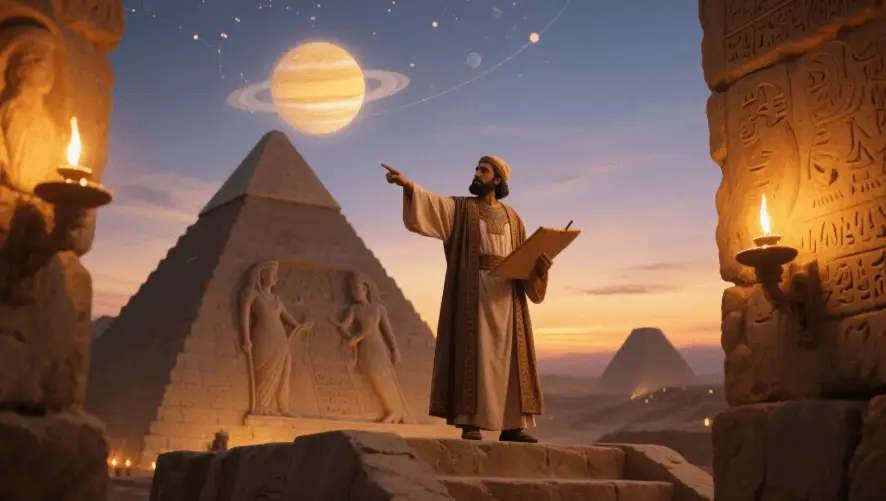
Early civilizations developed sophisticated mythologies to explain the behavior of celestial bodies, transforming random points of light into meaningful cosmic narratives. The Babylonians created detailed astrological systems linking planetary movements to divine will, while Egyptian mythology aligned their gods with specific stars and planets. These systems demonstrate how star lore functioned as both scientific record and spiritual guide.
Greek astronomers formalized this tradition by naming planets after their pantheon - Mercury (Hermes), Venus (Aphrodite), Mars (Ares), Jupiter (Zeus) and Saturn (Cronus). Each planetary significance reflected the deity's characteristics, creating an enduring connection between mythology and astronomy that persists in modern planetary nomenclature.
Planetary Archetypes: Mythological Meanings Behind Celestial Bodies
The planetary significance assigned by ancient cultures reveals profound psychological insights about human nature. Venus, universally associated with love and beauty across civilizations from Rome to Mayan culture, inspired artistic expression and romantic rituals. Mars' red hue led multiple cultures to associate it with war and aggression, demonstrating how observable planetary characteristics shaped astrological beliefs.
Saturn's mythology as the god of time and limitations influenced its association with structure and discipline in astrological systems. These planetary archetypes formed the foundation for complex astrological systems that still influence millions today, proving the enduring power of mythological thinking in celestial interpretation.
Constellation Mythology: Comparative Star Lore Across Civilizations
The comparative study of star lore reveals fascinating patterns in how different cultures interpreted the same celestial bodies. Orion appears as a hunter in Greek mythology, while Aboriginal Australians saw the constellation as a canoe carrying ancestral spirits. These variations demonstrate how local environments and values shaped universal astronomical observations.
The Big Dipper's interpretation ranges from a celestial bear in Native American traditions to a drinking gourd guiding slaves to freedom in African-American folklore. Such diverse interpretations of identical star patterns highlight the adaptability of mythological thinking while maintaining core narrative structures about human experience.
The Science-Mythology Continuum: Celestial Bodies in Modern Context
Modern astronomy maintains surprising connections to mythological traditions despite its scientific rigor. NASA's Juno spacecraft mission to Jupiter consciously referenced the Roman goddess who could see through her husband Jupiter's cloud disguises - an apt metaphor for a probe studying the gas giant's atmosphere. This demonstrates how contemporary science still draws upon mythological narratives for symbolic meaning.
The discovery of exoplanets continues this tradition, with astronomers naming new worlds after mythological figures from diverse cultures. This practice preserves the human storytelling impulse while expanding our cosmic horizons, proving that mythology and science can coexist in our understanding of celestial bodies.
Living Mythology: Astrological Beliefs in Contemporary Culture
Astrological beliefs rooted in ancient mythology continue shaping modern decision-making and self-understanding. The resurgence of interest in birth charts and planetary transits reflects a growing desire for meaning in an increasingly technological world. Psychological research confirms that archetypal thinking - whether through astrology or other symbolic systems - fulfills fundamental human needs for pattern recognition and personal narrative.
The Mercury retrograde phenomenon demonstrates how ancient astrological beliefs adapt to modern concerns, with millions today still attributing communication breakdowns to this astronomical event. This shows how celestial mythology evolves while maintaining core principles about planetary significance in human affairs.

Celestial Legacy: Mythology's Enduring Astronomical Influence
The intersection of mythology and celestial study represents one of humanity's most enduring intellectual traditions. From ancient star lore to modern astrophysics, our understanding of the cosmos remains deeply intertwined with storytelling and symbolic meaning. As we discover new celestial bodies and cosmic phenomena, we continue this millennia-old practice of weaving astronomical facts into meaningful narratives.
The planetary significance assigned by our ancestors still informs how we conceptualize space exploration and cosmic discovery. Whether through the names of spacecraft or the continued popularity of astrological beliefs, mythology maintains its role as bridge between scientific fact and human meaning-making. This enduring connection ensures that as we reach further into the cosmos, we carry forward the rich mythological traditions that first helped us comprehend the stars.
Ethan Starlighter
|
2025.05.28


