
How Solar and Lunar Cycles Impact PK's Festivals
Introduction: Celestial Influence on PK Festival Celebrations
The intricate relationship between Solar Cycles and Lunar Phases forms the foundation of Pakistan's rich festival traditions. These celestial phenomena don't merely mark time but actively shape the cultural identity of PK Festivals through precise Astrological Alignment. Understanding this cosmic connection reveals why certain celebrati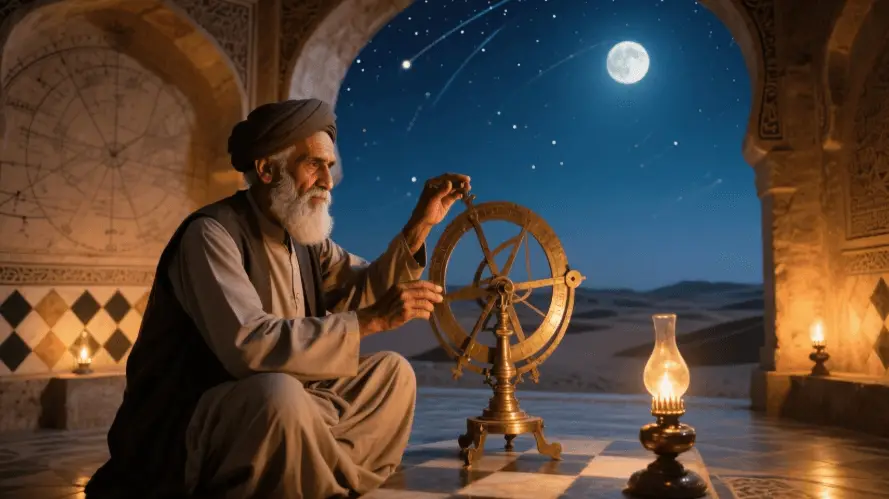 ons occur when they do and how generations have maintained these timing traditions despite modern challenges.
The Astronomical Foundations: Solar and Lunar Mechanics
Solar Cycles, spanning approximately 11 years, significantly influence climate patterns that affect agricultural festivals across Pakistan. The Lunar Phases cycle every 29.5 days, creating the lunar calendar basis for Islamic festivals. When these celestial movements combine with Astrological Alignment, they create the perfect conditions for determining Festival Timing with remarkable accuracy.
Cultural Calendar Systems in Pakistan
Pakistan uniquely employs both solar-based (Bikrami) and lunar-based (Hijri) calendars for different festivals. The Islamic calendar's dependence on Lunar Phases causes annual date shifts of up to 11 days against the Gregorian calendar, making moon sighting committees crucial for declaring festival beginnings.
Historical Roots of Celestial Festival Timing
Ancient Indus Valley civilizations developed sophisticated astronomical observations that still influence PK Festivals today. The winter solstice celebrations at Mohenjo-Daro demonstrate how Solar Cycles dictated harvest festivals, while medieval Sufi tradtions incorporated Astrological Alignment for Urs anniversary calculations.
Evolution of Traditional Practices
Pre-Islamic spring festivals like Basant adapted to Islamic periods while maintaining solar-based timing. Mughal emperors formalized moon sighting practices that standardized Eid celebrations across the subcontinent, blending Lunar Phases observation with royal decrees.
Contemporary Festival Timing Technologies
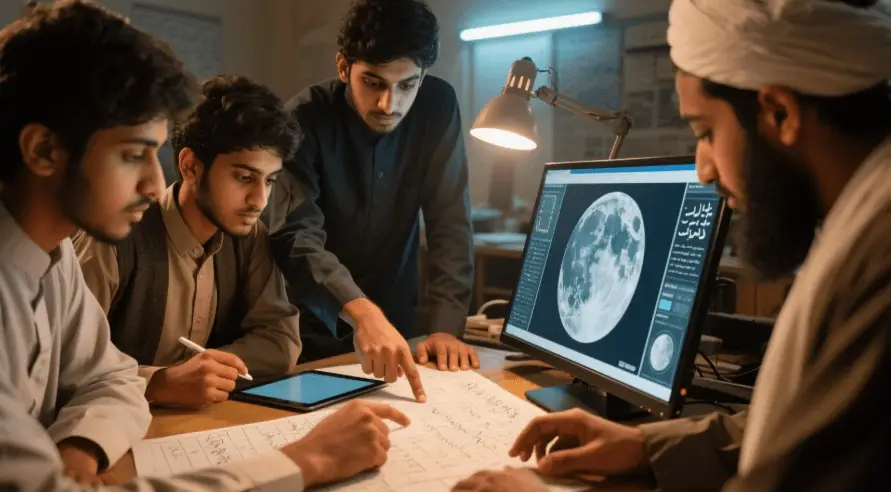
Modern Pakistan combines traditional moon sighting with astronomical software to determine Festival Timing. The Ministry of Religious Affairs now uses telescopic observations alongside naked-eye sightings, reducing controversies around Eid declarations. Mobile apps like 'Ruet-e-Hilal' provide real-time Lunar Phases updates to millions.
Case Study: Eid-ul-Fitr Determination
The Central Ruet-e-Hilal Committee employs a 27-point verification system combining Solar Cycles data, Lunar Phases projections, and on-ground observations from 28 locations. This system maintains religious authenticity while incorporating scientific precision for Astrological Alignment.
Major PK Festivals and Their Celestial Connections
Ramadan's timing shifts annually based on Lunar Phases, affecting everything from fasting durations to Eid shopping seasons. The Sufi festval of Urs at Data Darbar aligns with specific Solar Cycles positions believed to enhance spiritual energy. Basant kite festival marks the sun's movement into Pisces, demonstrating Astrological Alignment in seasonal celebrations.
Regional Variations in Festival Timing
Northern areas celebrate Nowruz (March 21) based on precise Solar Cycles, while coastal communities time their Melas with tidal patterns influenced by Lunar Phases. Kalash valley's Chilam Joshi festival follows ancient solar calendar untouched by Islamic or Gregorian systems.
Modern Challenges to Traditional Timing
Urban light pollution hampers moon sighting for PK Festivals, while climate change alters traditional seasonal markers. The 2020 pandemic forced virtual celebrations that maintained Astrological Alignment through digital platforms, creating new hybrid traditions.
Innovative Adaptations
Some communities now use NASA's Lunar Phases data as secondary verification, while others develop smartphone-compatible astrolabes. Solar-powered lanterns during Ramadan merge environmental consciousness with Solar Cycles awareness, showing how tradition evolves.
Future of Celestial Festival Timing
Astronomers predict Pakistan may adopt a unified calendar combining Solar Cycles and Lunar Phases data by 2030. Blockchain technology could create tamper-proof records of moon sightings, while augmented reality might visualize Astrological Alignment during festivals.
Preserving Cultural Astronomy
Universities now offer courses in traditional celestial navigation, ensuring future generations understand the science behind PK Festivals timing. The 2022 inclusion of Basant on UNESCO's intangible heritage list recognizes Pakistan's unique Solar Cycles-based celebrations.
Conclusion: Eternal Celestial Harmony
As Pakistan navigates the 21st century, the eternal dance of Solar Cycles and Lunar Phases continues guiding its Festival Timing with cosmic precision. The enduring role of Astrological Alignment in PK Festivals reminds us that some traditions transcend technology, connecting modern Pakistanis to their ancestors through shared observations of the same celestial patterns that inspired celebrations millennia ago.
Zain Ahmed
|
2025.05.28


